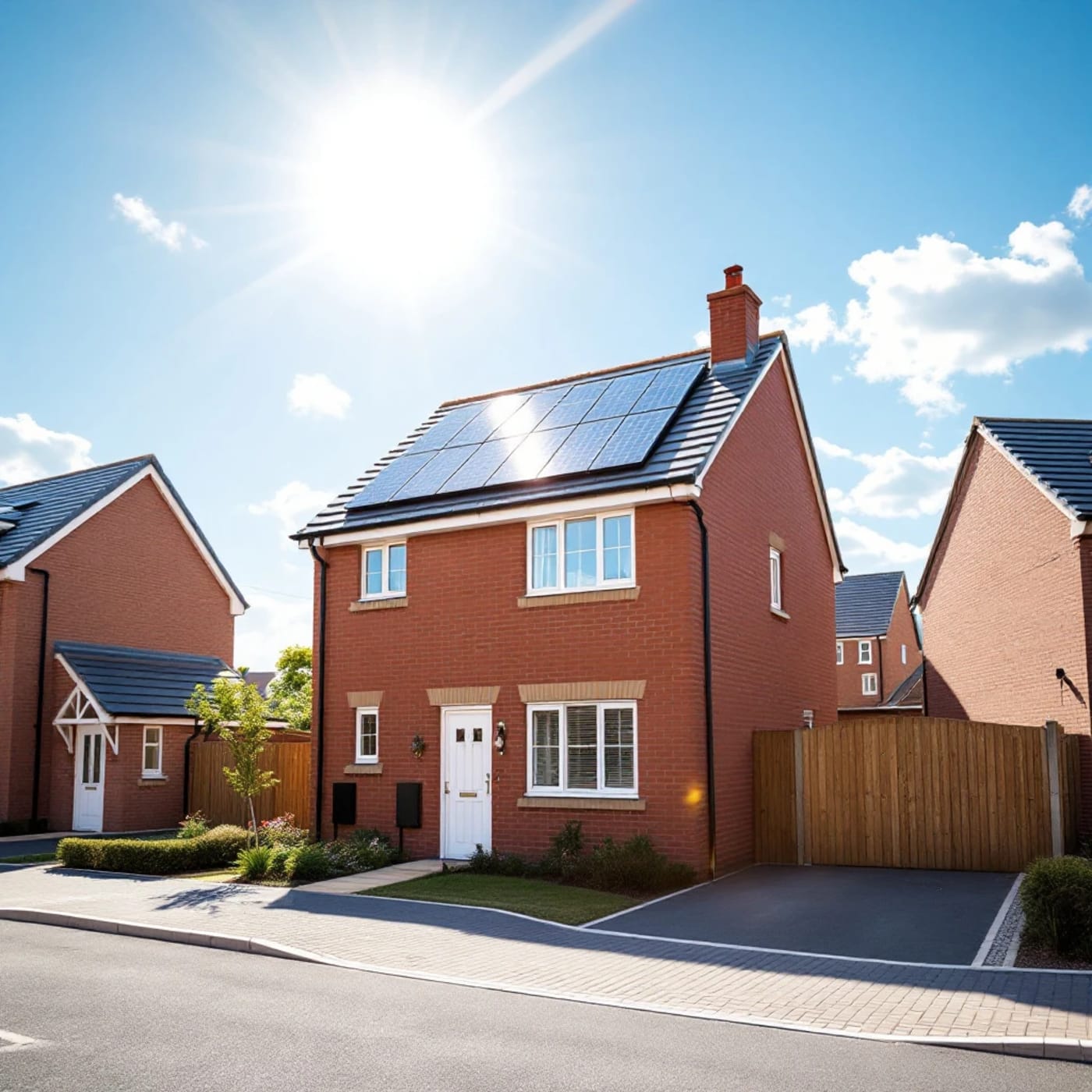
How Solar Actually Works on a New Build
Your panels power the house first. The problem is timing, not the system.
5 min readWhere does the electricity from my solar panels go?
Electricity from your solar panels goes to whatever is running in your home first, and only the surplus that the house is not using at that moment flows out to the grid.
The panels produce direct current (DC). An inverter, usually in the loft or garage, converts it to alternating current (AC) and feeds it into your consumer unit. From there it simply follows demand: if the fridge, router and a kettle are drawing power, the solar electricity supplies them before any is bought from the grid.
Nothing needs switching on. If the house needs more than the panels are producing, the difference is imported from the grid automatically. If the panels produce more than the house needs, the excess is exported automatically.
Why don’t solar panels cover more of my electricity bill?
Solar panels usually cover less of your bill than expected because they generate most in the middle of the day, while most household electricity is used in the morning and evening.
This is a timing problem, not a design fault. Generation climbs from mid-morning, peaks around midday and falls away by late afternoon. In a household where everyone is out at work or school, the house is using very little at exactly the moment the panels are working hardest.
Then the evening arrives. Cooking, washing, lighting and television all land between roughly 4pm and bedtime, when the panels are producing little or nothing. That electricity is bought from the grid at full price, even though the same home may have exported plenty a few hours earlier.
How much electricity does a typical new build solar system generate?
A 3.7kWp solar system facing south in the East Midlands generates about 3,600kWh a year according to the European Commission’s PVGIS model, but about 131kWh of that arrives in December compared with about 437kWh in May.
3.7kWp is what the Approved Document L 2026 benchmark, which applies to homes built under the rules taking effect on 24 March 2027, gives for a house with a 42m² ground floor, a common size for a three-bedroom semi (see what you get with new build solar). The figures above come from PVGIS (SARAH-3 dataset) for a Derby location, 40° roof pitch, 14% system losses, queried in September 2026.
Real homes vary. Panels facing east or west, a shallower roof pitch or shading from neighbouring houses all reduce output. The seasonal pattern is the same everywhere in the UK: summer months produce three or more times what December does.
How much solar electricity does a home use without a battery?
Industry estimates put the share of solar electricity a home uses without a battery at between 30% and 50%, with the rest exported to the grid.
These are industry estimates from secondary sources, not measurements. Your smart meter's export readings will show your own figure once you move in.
Where you fall in that range depends on whether someone is at home in the day. A household with someone working from home sits near the top; a household that is empty from 8am to 6pm sits near the bottom.
Worked example, using the 3.7kWp system above and 40% self-use:
- Used in the home: 1,440kWh, worth £379 at the Ofgem price cap electricity rate of 26.32p per kWh (1 October to 31 December 2026)
- Exported: 2,160kWh, worth £259 at 12p per kWh (Outgoing Octopus, September 2026) or £65 at 3p per kWh (the lowest large-supplier export rate in Sunsave's comparison, updated 26 August 2026)
Every kWh used at home is worth more than twice as much as a kWh exported, even on a good export tariff.
The 26.32p rate is the cap for 1 October to 31 December 2026 and assumes no VAT on electricity, which applies until 31 March 2027. When VAT returns the import price rises, which makes the solar you use yourself worth more, not less. Ofgem announces the next cap on 25 November 2026.
What happens to the solar electricity I don’t use?
Solar electricity you don’t use is exported to the grid automatically, and you are only paid for it if you have signed up to a Smart Export Guarantee tariff with an electricity supplier.
Export happens whether or not you are being paid. If you move in and never arrange an export tariff, your surplus still flows to the grid — you just give it away.
To be paid you need an MCS certificate for the installation and a smart meter that records half-hourly export readings. Both are covered in our guides to MCS certification and import and export meters. Export rates vary widely: in Sunsave's comparison updated 26 August 2026, single-rate export tariffs ranged from 3p to 16p per kWh.
How can I use more of my own solar electricity?
The cheapest way to use more of your own solar electricity is to run heavy appliances such as the washing machine, dishwasher and tumble dryer in the middle of the day on sunny days, using delay timers if nobody is home.
After that, the main options are:
- A home battery, which stores midday surplus for the evening. See how much a battery saves.
- Charging an electric car in the day, if it is at home. Many smart chargers have a solar-only mode.
- A solar diverter, which sends surplus to a hot water cylinder immersion heater. Smart diverters have been zero-rated for VAT when installed since 1 February 2024.
Want your solar system checked or upgraded?
Post a job for free and get quotes from local solar installers — system health checks, certification and upgrades.
Post a Job — Free