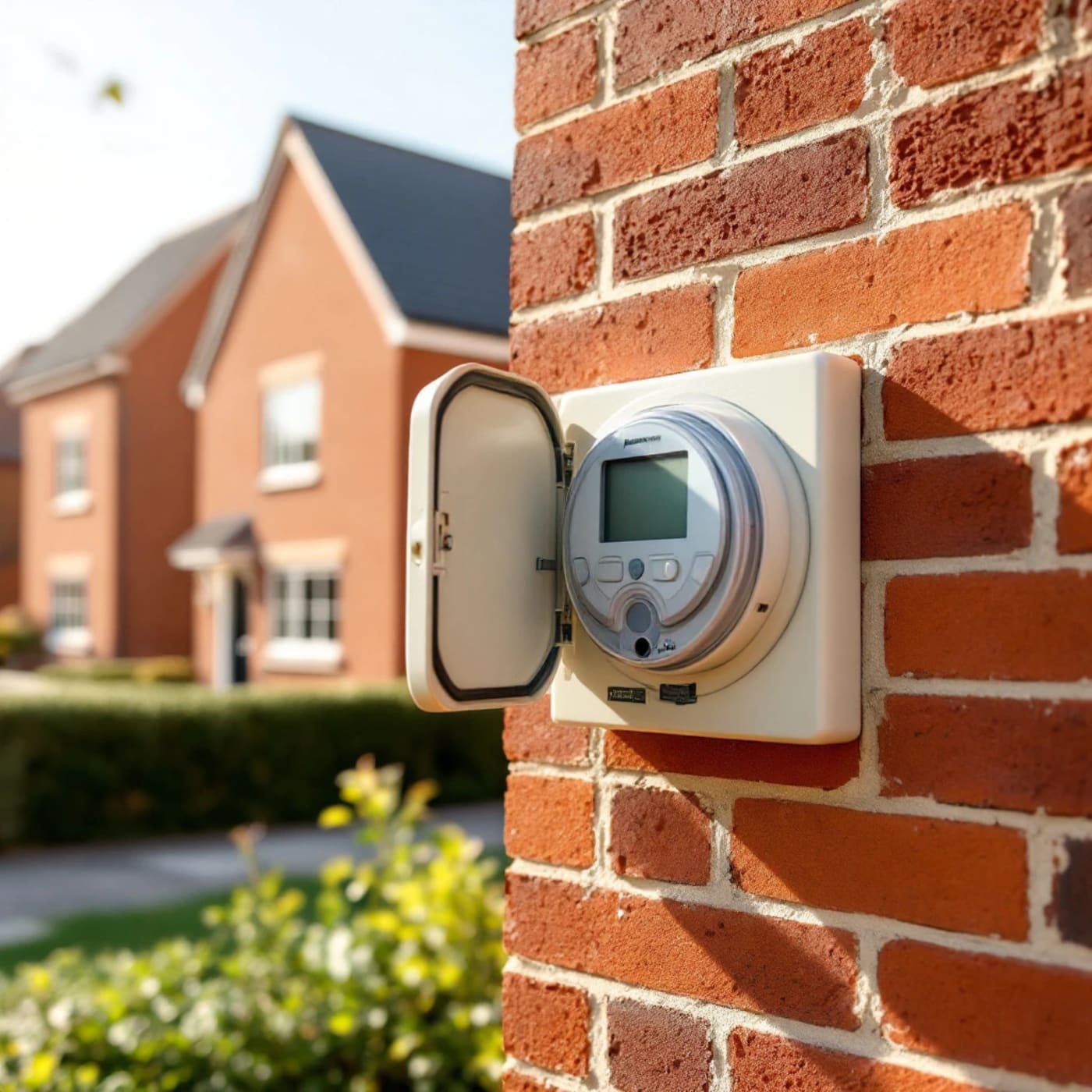
Import and Export Meters, Explained
What your meter needs to do before you can be paid — and what to check on move-in day.
4 min readWhat is the difference between an import meter and an export meter?
An import meter records the electricity your home takes from the grid, which your supplier charges you for, while an export meter records the electricity your home sends to the grid, which an export tariff pays you for.
In most new builds, one smart meter does both jobs using separate registers. Import and export are also identified separately in the electricity system, each with its own MPAN (see below).
Some solar systems also have a generation meter or inverter display showing the total the panels have produced. That figure is not used for Smart Export Guarantee payments, which are based on export.
What does my smart meter need to do for export payments?
For Smart Export Guarantee payments, your meter must be able to record half-hourly export readings, which almost all SMETS2 smart meters and most SMETS1 smart meters can do.
Ofgem's rules require half-hourly export metering and an export MPAN. Octopus, for example, says it needs a smart meter it can receive half-hourly export data from, which covers almost all SMETS2 and most SMETS1 meters (checked September 2026).
SMETS2 is the current generation of smart meter and what a new build should normally have. If your home was fitted with an older meter, or a non-smart meter, ask your supplier to replace it before you apply for an export tariff.
How are solar export payments measured and paid?
Solar export payments are calculated by multiplying the kWh your export meter records by your export tariff rate, and Smart Export Guarantee payments must be based on metered export, not an estimate.
Every Smart Export Guarantee tariff must pay more than zero, but the rate is up to the supplier. In Sunsave's comparison updated 26 August 2026, single-rate export tariffs ranged from 3p to 16p per kWh, and many of the best rates required you to buy your electricity from the same supplier.
At 12p per kWh, 2,160kWh of export a year is worth £259. At 3p, it is worth £65. Time-of-use export tariffs pay different rates at different times, which is why half-hourly readings matter.
What is an MPAN and do I need an export MPAN?
An MPAN (Meter Point Administration Number) is the number that identifies an electricity supply point, and you need a separate export MPAN before a supplier can pay you for the electricity you export.
Your import MPAN is printed on your electricity bill; the core number is 13 digits. A new build may not have an export MPAN until someone applies for one. Your export supplier normally arranges it when you sign up, and will ask for your MCS certificate.
What should I check about my meters on move-in day?
On move-in day, photograph your electricity meter readings, note your import MPAN, confirm the meter is a smart meter and which type, and ask the developer for your MCS certificate and inverter details.
- Meter readings: photograph the import and export registers with a date-stamped photo, so the developer's usage isn't billed to you.
- Generation reading: note the total on any generation meter or the inverter display.
- Meter type: check the meter label for SMETS2 or SMETS1.
- Supplier: find out which supplier the developer used, and whether an export MPAN already exists.
- Paperwork: MCS certificate, inverter make and model, and warranty documents.
Can I get paid for exported electricity without a smart meter?
Not under the Smart Export Guarantee: the scheme requires a meter that records half-hourly export readings, so without a suitable smart meter you export your surplus solar electricity for free.
Your panels keep working and you still save on the electricity you use in the home. You just aren't paid for the rest until the meter is sorted — so arrange it soon after completion. See how solar works on a new build for how much typically gets exported.
Need your solar set up for export?
Post a job for free and get quotes from local solar installers for certification, system checks and export setup.
Post a Job — Free