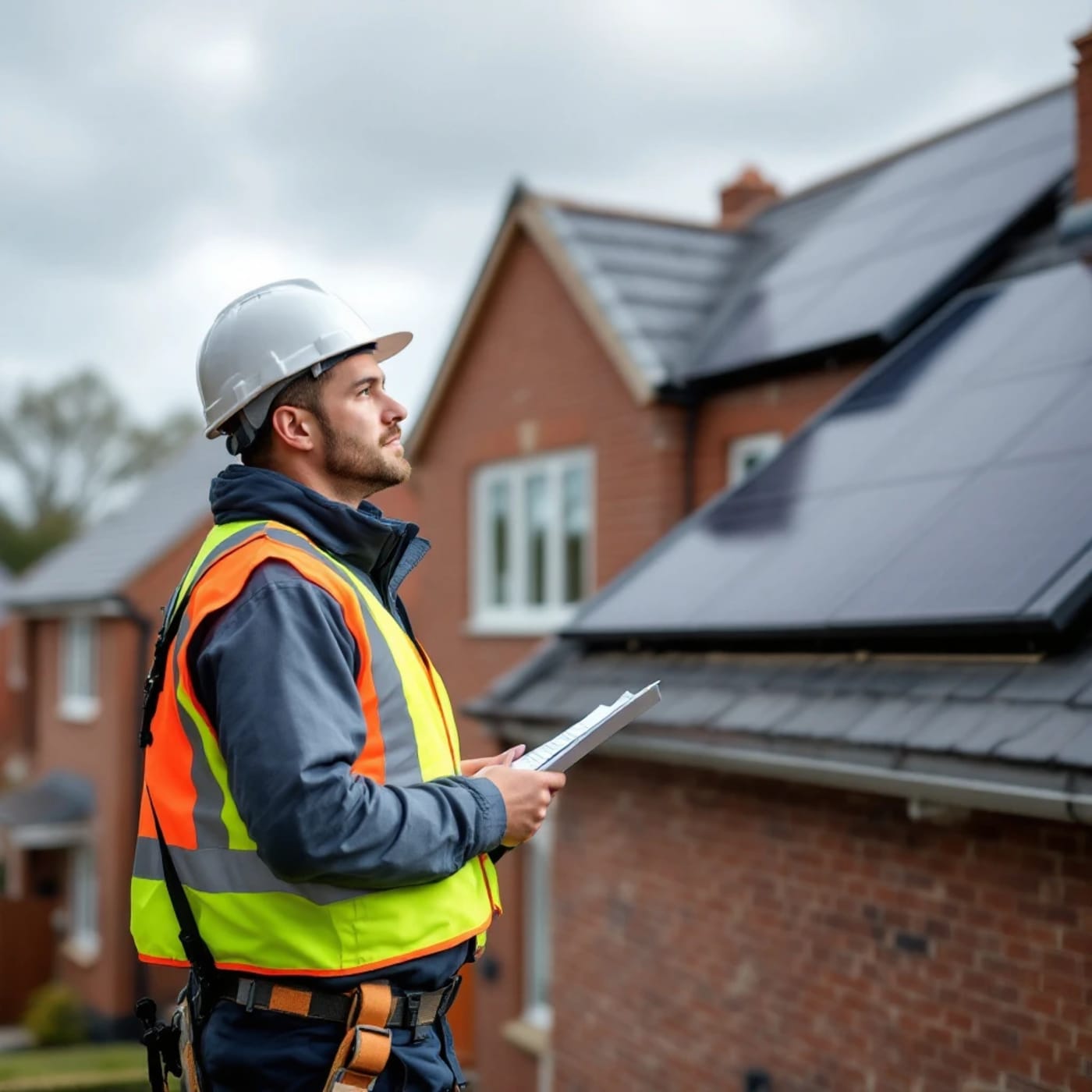
MCS Certification: The New Build Solar Trap
Developer-fitted solar isn't automatically certified. Without it, you can't get paid for exports.
5 min readWhat is MCS certification for solar panels?
MCS certification shows that a solar panel installation was designed, installed and commissioned by an MCS-certified installer to Microgeneration Certification Scheme standards, and the MCS certificate is the document electricity suppliers ask for before paying you for exported electricity.
The certificate is issued for a specific installation at a specific address. It records the system, the installer and their certification number. Keep it with your house documents — you'll need it to sign up for an export tariff and it helps when you sell.
Are new build solar panels automatically MCS certified?
No — solar panels fitted on a new build are not automatically MCS certified, because the Building Regulations do not require solar installations to be MCS certified, either under the current rules or under the Future Homes Standard rules that come into force on 24 March 2027.
Solar panels are common on new builds today but are not yet a legal requirement. Developers fit them because they help homes meet the 2021 energy rules. From 24 March 2027, Approved Document L 2026 will set a benchmark for how much generation a new home needs — but not who must install it. Homes whose building regulations application went in before that date can still be built under the 2021 rules if work starts before 24 March 2028, so a home completing in 2027 or 2028 may well have been built under the old rules.
Either way, if the developer's electrical contractor fitted and connected the panels, and that contractor is not MCS certified, no MCS certificate can be issued for your home.
This is the trap. The panels work, the house passes building control, and nobody notices until you try to get paid for your exports.
Can I get Smart Export Guarantee payments without an MCS certificate?
No — to receive Smart Export Guarantee payments you must show that your installation and installer are certified through MCS or an equivalent accredited scheme such as Flexi-Orb, and suppliers ask for the certificate when you sign up.
Without it, your surplus still flows to the grid, but nobody pays you for it. In our worked example, a 3.7kWp system exporting 2,160kWh a year would earn £259 a year at 12p per kWh (Outgoing Octopus, September 2026). Without a certificate, that is £0.
Some battery export tariffs, such as Octopus Flux, also ask for your MCS document before they switch you.
How do I check if my new build solar panels are MCS certified?
Check by asking your developer for the MCS certificate for your plot and confirming that the address, the system details and the installer’s certification number on it match your home.
- Look in your completion pack and Home User Guide for an MCS certificate.
- Check the installer on MCS's own "find an installer" directory at mcscertified.com, using the certification number on the certificate.
- If there is no paperwork, contact MCS directly and ask whether an installation is registered at your address.
What should I ask my developer about MCS before completion?
Ask your developer, in writing and before completion, which company will install and commission the solar panels, whether that company is MCS certified, and whether an MCS certificate will be handed over with your completion documents.
Putting it in writing matters: a sales advisor's "yes, it's all certified" is easy to forget. Also ask for:
- The inverter make, model and commissioning record
- Confirmation that the system was notified to your electricity network operator
- Panel and inverter warranty documents
See what you get with new build solar for the full list of questions for the sales advisor.
What can I do if my new build solar panels have no MCS certificate?
If your solar panels have no MCS certificate, first ask the developer to obtain one from the installer, and if that is not possible, ask an MCS-certified installer whether they can inspect the system and certify it, which is not guaranteed and is likely to cost you money.
- Raise it with the developer in writing. If you were told the system would be certified, keep that evidence and ask them to put it right.
- Ask for the installer's details. If the installer was MCS certified, the certificate may simply not have been passed on.
- Get an MCS installer to assess it. Whether they can certify an existing system depends on what they find; they may need to test, alter or replace parts before they can take responsibility for it.
Get a written quote before any work, and ask the developer to cover the cost if certification was promised.
Missing your MCS certificate?
Post a job for free and get quotes from local MCS-certified solar installers who can assess your system.
Post a Job — Free