New Build Snagging Checklist
The room-by-room checklist used by UK new build buyers — what to look for, in the order to check it.
5 min readHow to use this checklist
This is the snagging checklist I’d hand a buyer on day one. It’s the running order I use myself, and the reasoning behind each item comes from 12 years inside new homes across five UK housebuilders. Work through it in order — the items at the top are the ones builders rely on you signing off early (like scratched glass), or the ones you’ll only notice weeks after you’ve moved in (like a dead socket).
For the full interactive version — a room-by-room walkthrough that lets you log each snag with photos and generate a PDF report ready to hand to your builder — jump to David, our free AI snagging assistant. The list below is the printable / scannable companion to that tool.
Scratched glass
Scratches on glass can be very hard to see — it completely depends on the time of day and the light. Take the time to look at every pane in different light and at different times of day. This one matters more than people think, because builders often ask you to sign that the glass is fine very early on. If you sign and a scratch turns up later, the builder can push back and say it could have been done by you, not them — and refuse to fix it. So look properly, before you sign anything.
Doors — do they actually work?
Not how they look — whether they close, open and lock correctly. It's amazing how long someone can go without ever actually closing a bedroom door; people live in a house for weeks without shutting every door once. Go round and simply open, close and lock every door in the house, making sure each one runs smoothly.
Tops of doors
Staying with doors — painters very often miss the tops. Walk down the stairs with the ground-floor doors open and look at the top edges as you come down. You may well spot bare wood that shouldn’t be there.
Plug sockets — are they all working?
It can take weeks before a household actually uses every socket. You don't want to discover a dead socket on a Friday night when you've settled in for a film and the one you planned to use is the one that doesn't work. Grab something simple and portable — a hairdryer is perfect — and walk round testing every socket.
Appliances and isolator switches
Not common, but it does happen — are all your appliances actually working and wired in? If the build included appliances, check every one. Picture moving day: you've grabbed a takeaway because of course you have after a long day lugging boxes, and you're looking forward to your first proper home-cooked meal the next day — only to find the oven was never wired in. Trust me, it happens.
Loose or broken roof tiles
Easy to check, easy to forget. Walk around the outside and have a proper look up at your roof. A damaged or loose tile can let water into the roof space, and unlike an older house — where you might pop into the loft now and then — you may never go up there, so a leak can run unnoticed for months. Always worth a walk round with your eyes on the roof.
Blocked drains
Test every drain, every toilet and every tap, and make sure they all drain away quickly with no smells. New-build drains commonly get partially blocked with building material left in the system.
Uneven slabs and fencing
If you move in over winter it might be months before you're really out in the garden — but don't wait until summer to check. Any broken, damaged or uneven slabs, and the fencing, get them on the list now while you're still in your snagging window.
Silicone and sealant
Check around the bath, below the shower screen and inside the shower cubicle to make sure everything's sealed properly. An unsealed floor in a wet room means a big leak in the lounge below.
Painting
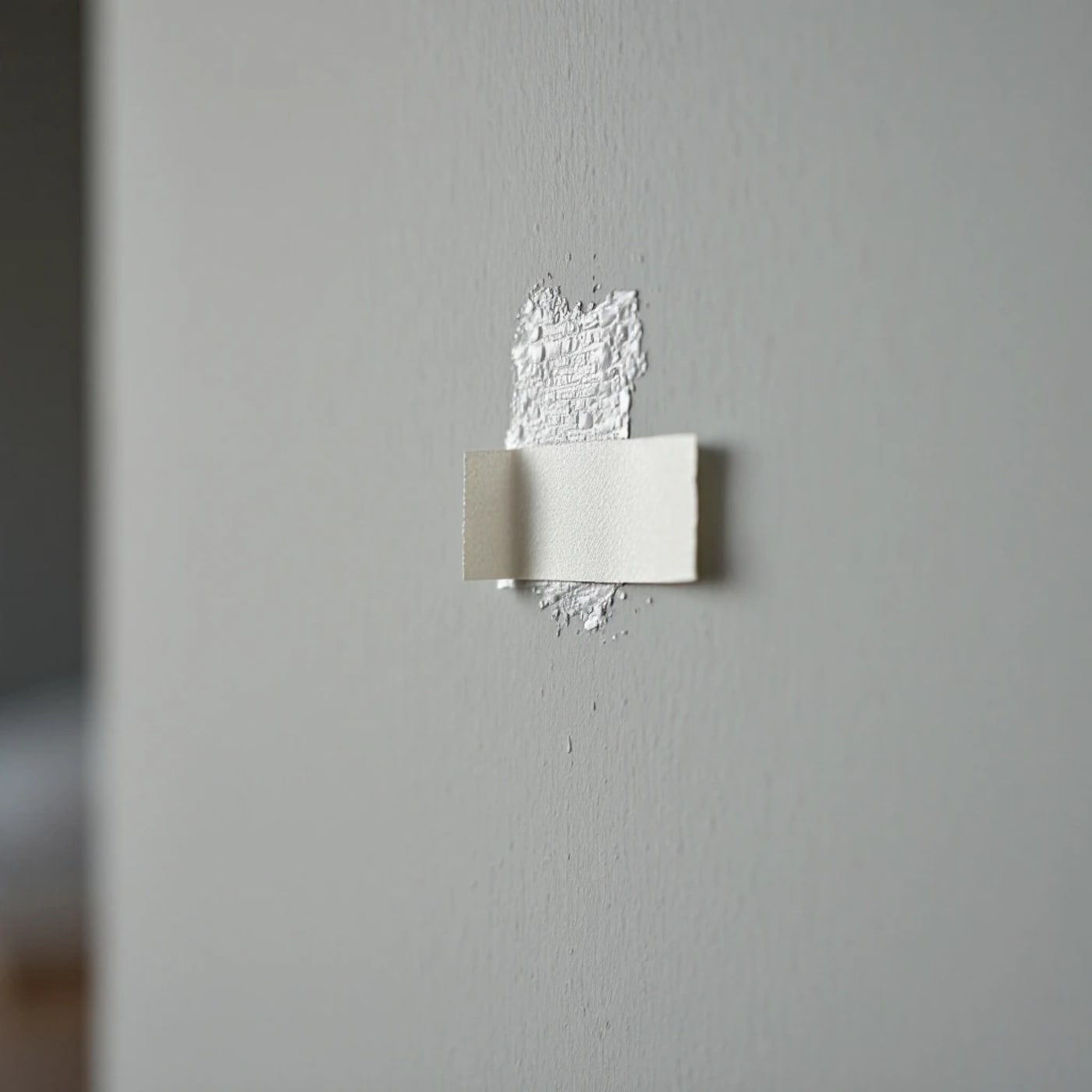
The number-one thing people find — and of course it is. Be thorough, make a list, and a handy trick: leave a small piece of tape next to each paint snag to help the painter find it again. The rule of thumb: anything you can see from a metre away, get it on the list.
Build your checklist free with David
David is our free AI snagging assistant. He’ll walk you through every room one by one, log each snag with photos as you go, and generate a downloadable PDF report you can send straight to your builder.
Start a Free Snagging Session