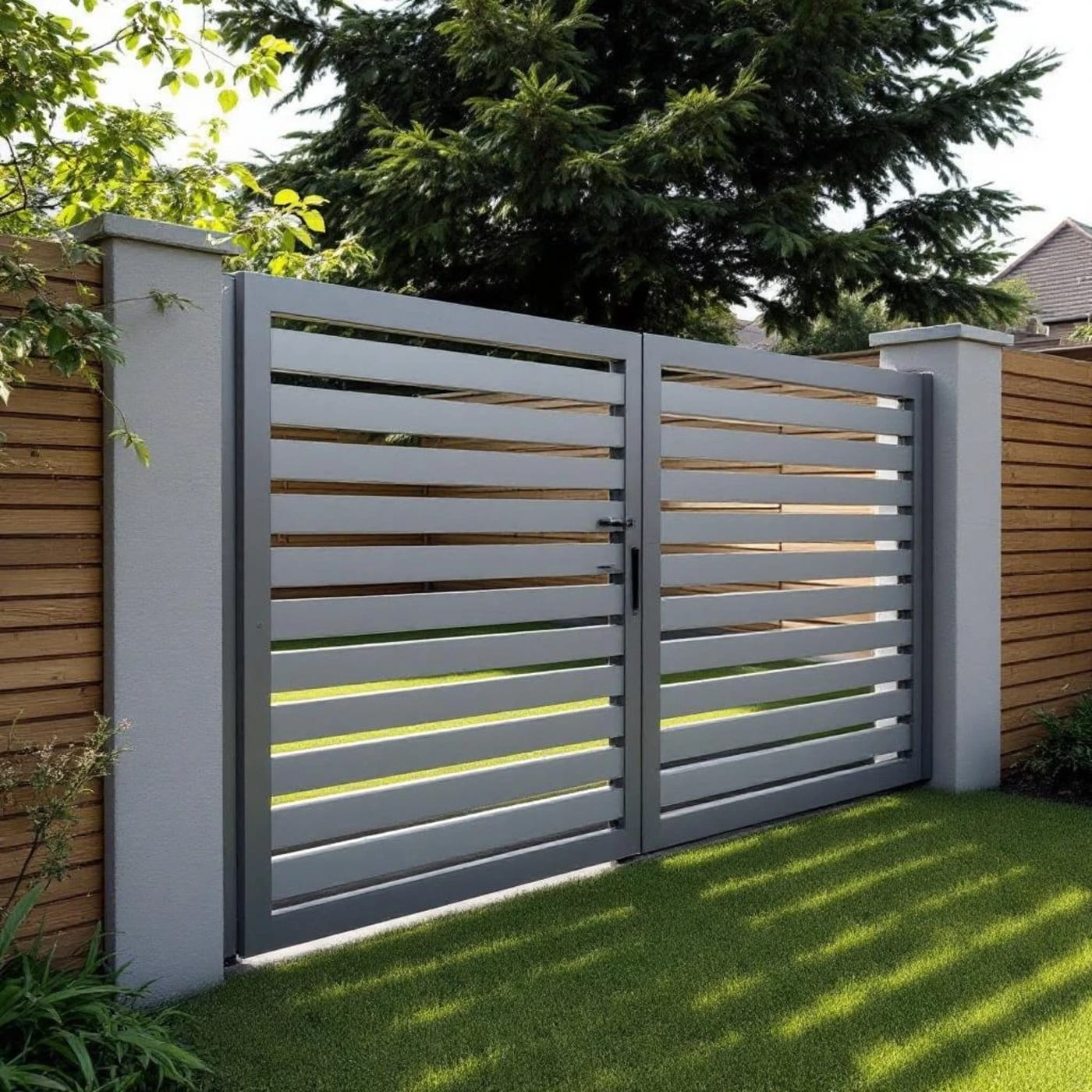
Fencing & Boundaries: Beyond the Builder's Panels
Standard panel fencing is fine. But 'fine' isn't why you bought a new home.
5 min readWhat the builder provides
Most new builds come with 1.8m close-board or overlap panel fencing along the rear and side boundaries. It's functional, it provides privacy, and it meets the minimum specification. But it's also the cheapest option available — thin timber, basic posts, no character.
The good news: builder fencing will last 5-10 years, so there's no rush to replace it. Many buyers plant climbers and tall border plants to soften the panels first, then upgrade the fencing itself a few years later when budget allows.
Contemporary fencing styles
Horizontal slat: The most popular upgrade in 2026. Clean horizontal timber or composite slats with slim gaps between them. Modern, architectural, and instantly makes a garden look designed. £60-£120 per panel (6ft x 6ft). Available in natural cedar, treated softwood, or composite.
Hit and miss: Alternating boards on each side of the rail, creating a semi-private screen with excellent wind resistance. More interesting than solid panels, allows light through while still screening. £40-£80 per panel.
Composite fencing: Made from recycled wood-plastic composite. Won't rot, won't need treatment, won't warp. Available in contemporary grey, charcoal, or wood-effect finishes. More expensive upfront (£80-£150 per panel) but zero maintenance for 20+ years.
Venetian / louvred: Angled horizontal slats that let light and air through while maintaining privacy. A premium look that suits modern architecture perfectly. £70-£110 per panel.
Who owns which fence?
The eternal question — and the answer is in your title deeds. Look for "T marks" on the boundary plan: the T points towards the property that owns (and is responsible for) the fence. If there's no T mark, check with your developer or solicitor.
In most new build estates, you'll own the fence on one side and your neighbour owns the other. The rear fence may be owned by you or by the property behind — again, check your deeds.
Important: You can only modify or replace fencing that you own. If you want to upgrade your neighbour's fence, you'll need their agreement (and often a contribution to the cost). Many new build buyers get around this by installing their own fence on their side, 2-3cm inside the boundary line, and leaving the neighbour's fence in place.
Planning permission
For most new build gardens, you don't need planning permission for fencing up to 2m high in the rear garden, or 1m high at the front. However, there are exceptions:
- Conservation areas: Some new build estates fall within conservation zones. Check with your local council.
- Covenant restrictions: Your developer may have placed covenants on the property restricting fence heights, styles, or colours. Read your transfer deed carefully.
- Corner plots: If your garden borders a road or footpath, different height restrictions apply.
- Listed building proximity: Unlikely for a new build, but if you're near one, additional rules may apply.
DIY vs professional
DIY: Replacing panels in existing posts is a straightforward DIY job. The posts are already in the ground — you just slot new panels in. Budget a full day for a typical new build rear boundary (4-6 panels).
Professional: If you're replacing posts as well as panels (or installing a completely new fence), this is heavier work. Concrete post bases need digging, posts need to be perfectly level, and the whole run needs to be straight. A fencing contractor will do a better job, faster, and often for not much more than the cost of materials + your weekend.
Typical costs
- Standard overlap panel (6x6): £20-£35 per panel
- Close-board quality panel: £35-£55 per panel
- Contemporary horizontal slat: £60-£120 per panel
- Composite panel: £80-£150 per panel
- Concrete posts and gravel boards: £25-£40 per bay
- Professional installation: £30-£50 per panel (labour)
For a typical new build rear garden (4-6 panels, one side): budget £300-£600 for standard upgrade or £600-£1,200 for contemporary/composite. Professional fitting adds £150-£300.
Want a professional to transform your garden?
Post a job for free and get quotes from trusted local landscapers near you.
Post a Job — FreeRecommended Products
 AD
ADCuprinol Garden Shades Urban Slate 2.5L
£36.38
 AD
ADGIGALUMI Solar Lights 6-Pack Warm White
£24.99
 AD
ADWham Vista 3x60cm Round Planters Grey
£34.38
 AD
ADEUGAD WPC Composite Decking Tiles 12-Pack
£77.99
 AD
ADLuxury Artificial Grass 40mm 1m x 2m
£21.95
 AD
ADbigzzia 4-Piece Rattan Garden Furniture Set
£93.49
As an Amazon Associate, MyNewHomeHub earns from qualifying purchases. Prices shown were correct at time of publishing.