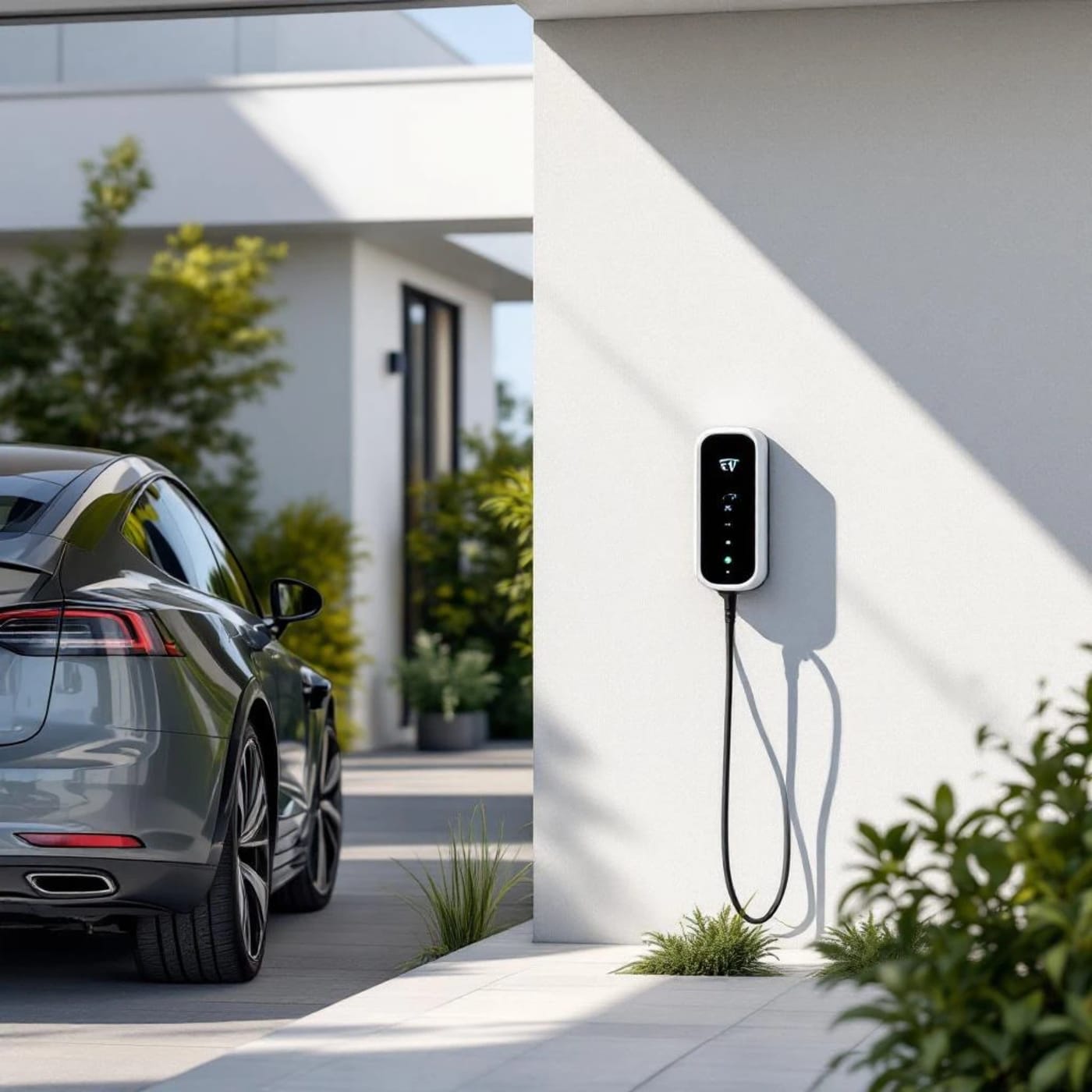
Charge at home for a fraction of the cost of petrol.
Everything you need to know about installing an EV charger at your new build home
Charging an electric car at home costs about 2.3p per mile on an off-peak EV tariff, or 7.5p per mile at the standard price cap rate, against about 16.6p per mile for a petrol car — a saving of roughly £1,000 a year at an average 7,100 miles on off-peak charging.
How much does charging at home save compared with petrol?
At an average 7,100 miles a year, charging at home saves about £1,020 a year over a petrol car on an off-peak EV tariff, or about £645 a year if you pay the standard price cap rate for every unit — so "thousands" only applies to high-mileage drivers.
Assumptions:
- Petrol price: 164.4p per litre, the UK average for the week of 7 September 2026 (DESNZ weekly road fuel prices).
- Petrol car economy: 45 miles per gallon, an assumed typical real-world figure (1 gallon = 4.546 litres).
- Electric car efficiency: 3.5 miles per kWh — an assumption towards the lower end of typical real-world figures, to allow for winter driving, motorway use and charging losses.
- Standard electricity price: 26.32p per kWh, the Ofgem price cap for 1 October to 31 December 2026, which assumes no VAT on electricity until 31 March 2027.
- Off-peak price: 8p per kWh, the Intelligent Octopus Go rate checked in September 2026, which needs a compatible car and charger.
- Mileage: 7,100 miles a year, the average for all cars in England in 2025 (Department for Transport, National Travel Survey).
The arithmetic:
- Petrol: 164.4p × 4.546 ÷ 45 = 16.6p per mile → £1,179 a year
- Home charging, off-peak: 8p ÷ 3.5 = 2.3p per mile → £162 a year (saving about £1,020)
- Home charging, price cap rate: 26.32p ÷ 3.5 = 7.5p per mile → £534 a year (saving about £645)
On off-peak charging the saving reaches £2,000 a year at about 14,000 miles; at the price cap rate it takes about 22,000 miles. The National Travel Survey puts the average for battery electric cars at 9,400 miles, which would save about £1,350 a year off-peak. These figures cover energy only — not public charging, servicing, insurance or tax.
Many new build owners aren't starting from scratch. If your home is in England, has parking within its site boundary and was built under Part S of the Building Regulations, which took effect on 15 June 2022, it should already have a chargepoint or a cable route ready for one — so check what you have before paying for a full installation. Part S applies in England only; Scotland, Wales and Northern Ireland set their own building rules. Whether your consumer unit and supply can take a charger depends on how your home was wired, which an installer checks at survey. Installing a new circuit is notifiable electrical work under Part P, so it must be certified — use an installer registered with a competent person scheme.
Do You Already Have a Chargepoint?
Most new builds in England since June 2022 have a chargepoint or cable route. How to tell, upgrading a basic unit, and what to do if there's nothing.
Read guide →EV Charger Grants: Who Can Claim
Most new build owners can't — including most new build flats. Who can still get the £500 grant, and how to check.
Read guide →Best Home EV Chargers 2026
Ohme, Wallbox, Pod Point, Easee, Andersen — compared side by side for new builds.
Read guide →Installation Cost Guide
What a full installation costs, and when a new build with a cable route needs less work.
Read guide →Type 1 vs Type 2 Explained
Which connector do you need? Tethered vs untethered? 7kW vs 22kW? Made simple.
Read guide →How Long Does Installation Take?
Typically 3-4 hours for a new build. Here's what happens and when to book it.
Read guide →Finding a Trusted Installer
Which credentials matter, what to ask, and red flags to avoid.
Read guide →Find an EV charger installer
Post a job for free and get quotes from local EV charger installers who can certify the work
Test your existing electrics first — sockets, isolators, fittings: New build snagging guide →