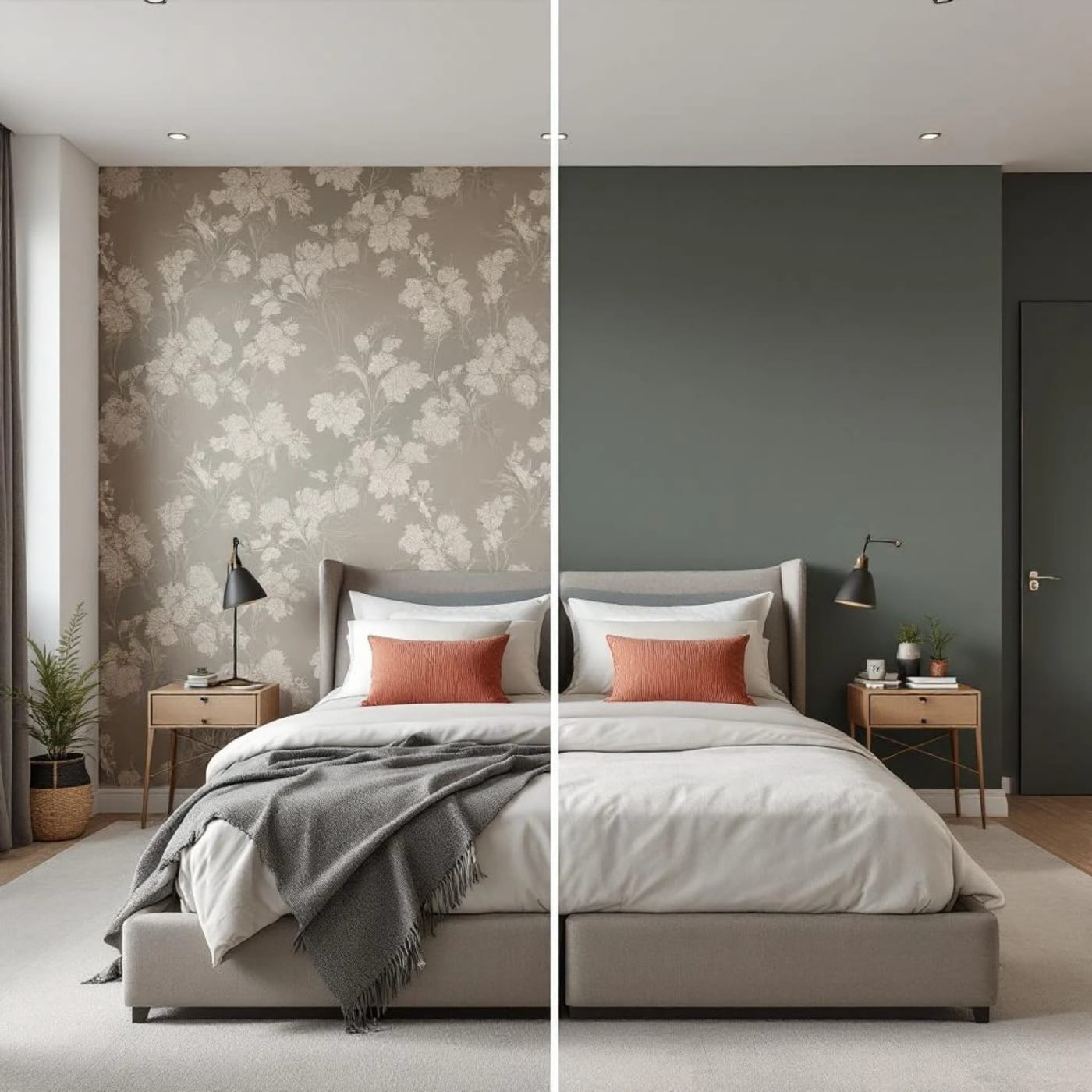
Wallpaper vs Paint: The Honest Comparison
Plus the insider tip about new builds that could save you hundreds.
5 min readThe insider tip most buyers don't know
Here's something your developer won't tell you: new build plaster continues to dry and settle for 9-12 months after construction. During this time, hairline cracks can appear along plasterboard joints, around door frames, and in corners. These are normal — they're called "settlement cracks" and they don't indicate structural problems.
But they do affect wallpaper. If you wallpaper in the first year, those hairline cracks can tear through the paper, leaving visible lines that are expensive to fix. Many professional decorators recommend waiting 12 months before wallpapering a new build — and painting in the interim.
Paint is flexible enough to bridge minor settlement cracks. Wallpaper isn't. This is genuinely useful insider knowledge that can save you from wasting money on wallpaper that cracks within months.
When wallpaper works better
Pattern and personality: If you want bold florals, geometric patterns, textured designs, or metallic effects, wallpaper does things paint simply can't. A single statement wall of beautiful wallpaper creates a focal point that no amount of paint can replicate.
Covering imperfections: While new builds are generally smooth, occasionally you'll find an area with minor plaster blemishes. Textured wallpaper hides these better than paint, which can highlight them.
Luxury feel: High-quality wallpaper (grasscloth, silk, or heavy textured papers) creates a tactile, premium feel that flat paint can't match. In a dining room or master bedroom, it elevates the entire room.
When paint works better
Year one of a new build: As discussed above — paint first, wallpaper later. Let the house settle, fill any cracks at the one-year mark, then wallpaper with confidence.
Budget: Paint is dramatically cheaper. A feature wall costs £20-£50 in paint vs £60-£150 in wallpaper (plus paste and tools). For a whole room, the difference is hundreds of pounds.
Easy to change: Bored of the colour? Paint over it in an afternoon. Wallpaper removal is a full day's work with a steamer, and you may need to re-skim the plaster afterwards.
Kitchens and bathrooms: Moisture and steam are enemies of wallpaper. Paint (especially kitchen/bathroom-specific formulas) handles humidity much better. There are moisture-resistant wallpapers, but they're expensive and limited in design options.
Paste the wall vs paste the paper
Paste the wall: You apply paste directly to the wall, then hang the dry paper. Easier, faster, less mess, and the paper doesn't need soaking time. Most modern wallpapers are paste-the-wall. This is the method to choose if you're DIY-ing.
Paste the paper: Traditional method — apply paste to the back of the paper, let it soak for a few minutes, then hang. More faff but some premium and traditional papers still require this method. Check the label before buying.
The 2026 trend
The dominant trend is clear: one statement wallpaper wall plus complementary paint on the other three. This gives you the best of both worlds — the pattern and personality of wallpaper, the simplicity and economy of paint, and a room that feels designed rather than all-over busy.
Popular combinations: a bold botanical or tropical wallpaper behind the bed with soft green paint on the sides. A geometric metallic paper on the living room chimney breast with warm neutral paint everywhere else. A textured grasscloth paper in the dining area with a complementary paint colour flowing through to the kitchen.
Cost comparison per room
- Paint only (whole room): £40-£100 (2-3 tins of good quality paint)
- Wallpaper feature wall + paint: £80-£200 (2-3 rolls + paste + paint for other walls)
- Wallpaper full room: £150-£500 (8-12 rolls depending on room size and pattern repeat)
- Professional decorating (paint, per room): £300-£600
- Professional wallpapering (feature wall): £150-£300
- Professional wallpapering (full room): £400-£800
Want a professional finish?
Post a job for free and get quotes from trusted local decorators near you.
Post a Job — FreeRecommended Products
 AD
ADFrenchic Lazy Range Chalk Paint Loof 250ml
£14.85
 AD
ADFrogTape Multi-Surface Masking Tape 24mm
£8.00
 AD
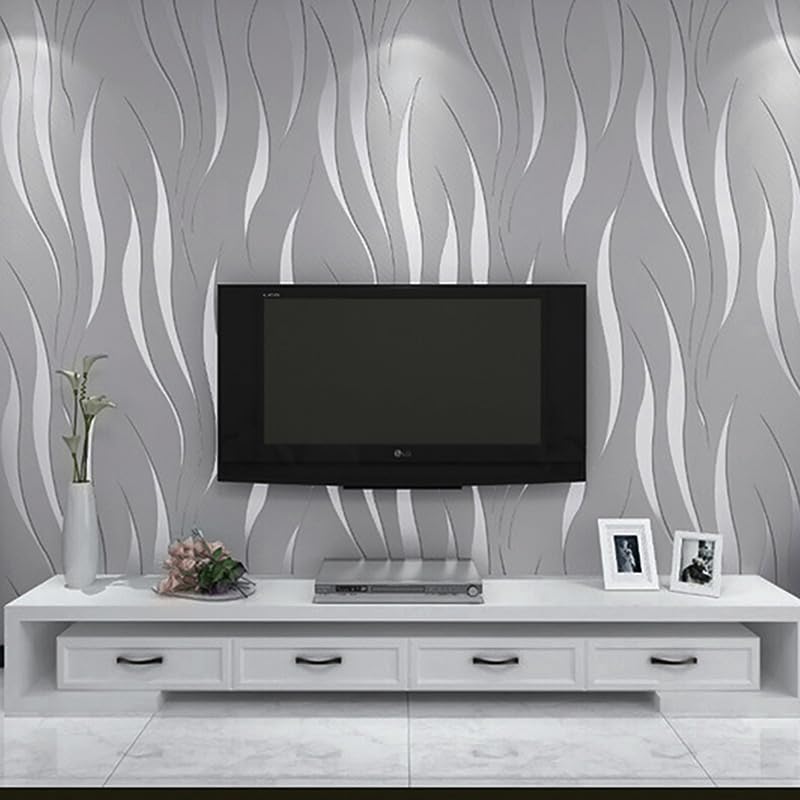
ADSnewvie Grey Geometric Wallpaper
£4.59
 AD
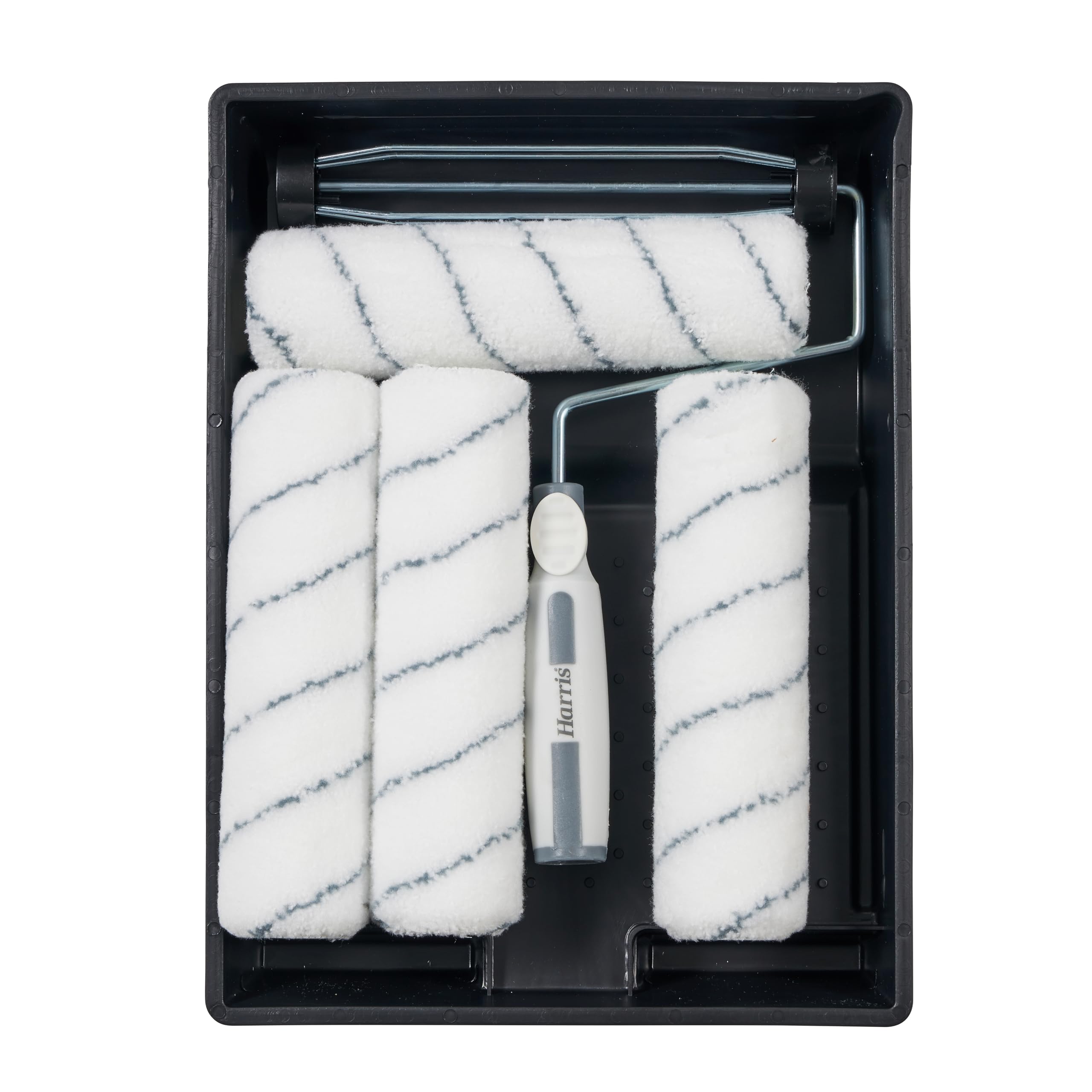
ADHarris Seriously Good Roller Set 9 inch
£9.79
 AD
ADShaker Wall Panelling Kit MDF + Adhesive
£23.00
 AD
ADDulux Easycare Polished Pebble 5L
£29.37
As an Amazon Associate, MyNewHomeHub earns from qualifying purchases. Prices shown were correct at time of publishing.