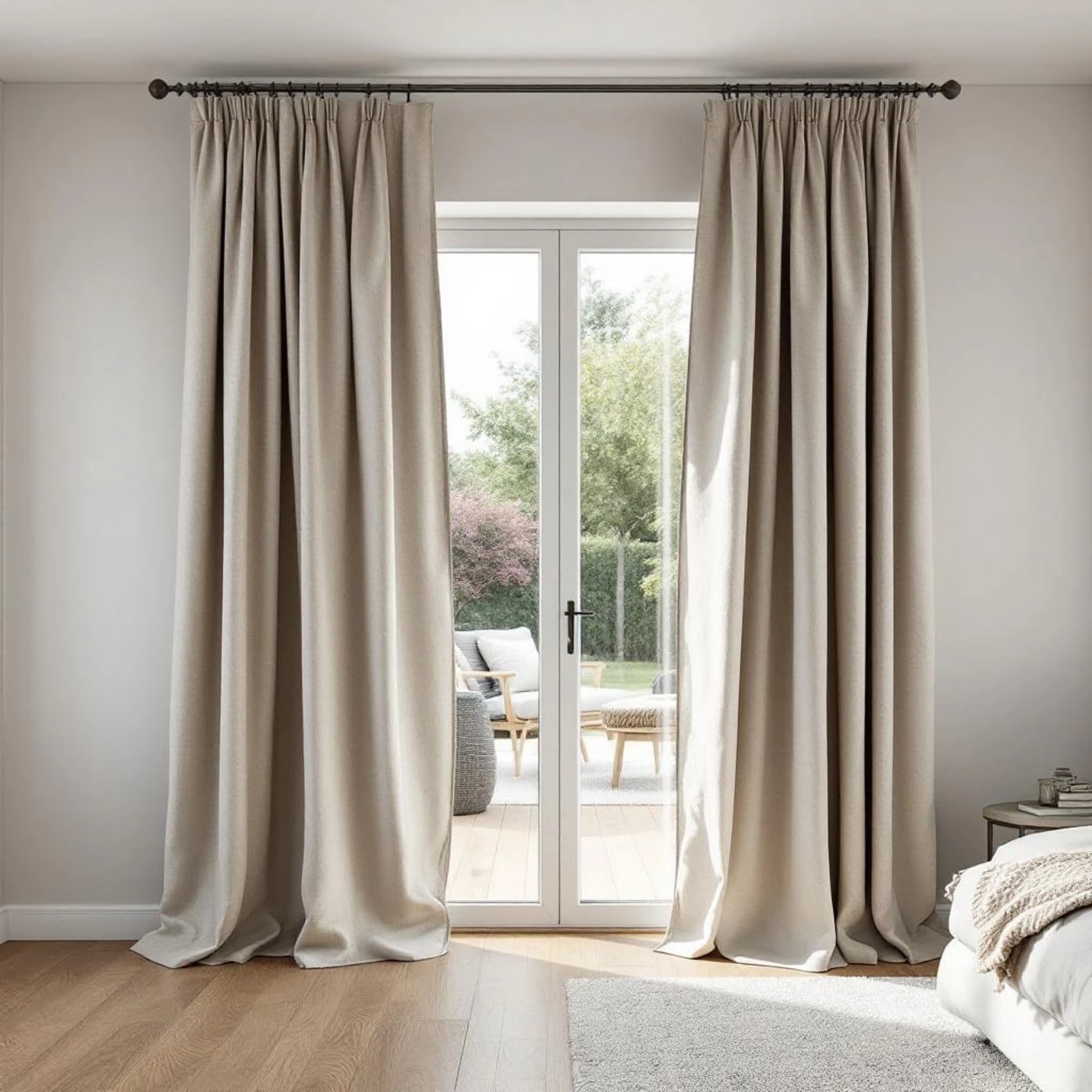
Should Your Curtains Touch the Floor?
The short answer: yes. Here's how to get the length exactly right.
4 min readThe answer: yes, floor-length is the look in 2026
Let's cut to the chase. In 2026, the overwhelming trend — and the advice from every interior designer we've spoken to — is that curtains should touch the floor. Floor-length curtains make rooms look taller, more elegant, and more finished. They're the standard for any room where you want a grown-up, considered look.
Short curtains that hover above the sill or sit at radiator height look dated. They were practical in the 1990s, but interior trends have moved firmly towards full-length, flowing fabric. If you're dressing the windows in a brand new home, go floor-length. You won't regret it.
The different length options explained
Floor-length (just touching): The curtain hangs to exactly where the floor meets the fabric — about 1cm above the floor. This is the most popular and practical choice. Clean, modern, no dust-gathering pooling. Perfect for new builds.
Puddle / break (2-10cm on the floor): The curtain pools slightly on the floor for a romantic, luxurious look. Beautiful in a master bedroom or formal living room, but impractical in high-traffic areas. You'll be straightening them constantly.
Sill-length: The curtain ends at the windowsill. Only really works for kitchen windows above a worktop. Anywhere else, it looks like the curtains shrank in the wash.
Below-sill: The curtain hangs 10-15cm below the sill. An awkward in-between length. Unless you have radiators directly below the sill and no floor space, avoid this.
What works in a new build specifically
New builds typically have large windows, often stretching from near the ceiling to just above the skirting board. This is great for curtains — you get a dramatic sweep of fabric from ceiling to floor.
However, new builds also tend to have radiators below most windows. Floor-length curtains will cover your radiators, which can reduce heating efficiency by 30-40%. The solution? Use a curtain pole wide enough that the curtains pull back fully past the radiator, or pair floor-length curtains with a roller blind for everyday use and only close the curtains in the evening.
One more thing: new build floors can be uneven. Measure the drop in three places (left, centre, right) and use the average. If there's more than a 1cm difference, consider having curtains made to measure rather than buying off-the-shelf.
Heading types explained
Eyelet: Large metal rings punched into the fabric, threaded onto a pole. Creates deep, even folds. The most popular heading for contemporary new builds — modern, fuss-free, and easy to draw. Works best with a statement curtain pole.
Pencil pleat: Tightly gathered fabric creating a row of slim, pencil-like folds. More traditional but incredibly versatile. Works with poles or tracks. Good if you want a fuller, more gathered look.
Pinch pleat: Fabric pinched together at regular intervals creating elegant, structured folds. More formal and tailored. Often seen in higher-end homes and show homes.
Wave / S-fold: A contemporary heading that creates a soft, even wave pattern. Requires a special track system. Increasingly popular in new builds for a clean, hotel-like look.
Want a professional to handle it?
A local blind or curtain fitter will measure, supply, and install everything — so you can focus on enjoying your new home.
Post a Job — FreeRecommended Products
 Make My BlindsAD
Speciality Country Fair Roller Blind
Make My Blinds
£16.99
 Make My BlindsAD
Blossom in Mauve
Make My Blinds
£29.99
 Make My BlindsAD
Geo Zest
Make My Blinds
£29.99
 Make My BlindsAD
Geo Silver
Make My Blinds
£29.99
 Make My BlindsAD
Geo Indigo
Make My Blinds
£29.99
 Make My BlindsAD
Geo Graphite
Make My Blinds
£29.99
 Make My BlindsAD
Geo Fuscia
Make My Blinds
£29.99
 Make My BlindsAD
Pocket Truffle
Make My Blinds
£32.99
 Make My BlindsAD
Pocket Sunflower
Make My Blinds
£32.99
 Make My BlindsAD
Pocket Spa
Make My Blinds
£32.99
 Make My BlindsAD
Pocket Silver
Make My Blinds
£32.99
 Make My BlindsAD
Pocket Graphite
Make My Blinds
£32.99
 Make My BlindsAD
Pocket Dove
Make My Blinds
£32.99
 Make My BlindsAD
Pocket Champagne
Make My Blinds
£32.99
 Make My BlindsAD
Cracked Silver Hue
Make My Blinds
£32.99
 Make My BlindsAD
Cracked Ivory
Make My Blinds
£32.99
 Make My BlindsAD
Cracked Copper
Make My Blinds
£32.99
 Make My BlindsAD
Cracked Golden Sun
Make My Blinds
£32.99
 Make My BlindsAD
Opulent Faux Silk Sangria
Make My Blinds
£17.99
 Make My BlindsAD
Faux Silk Pure White Roman Blind
Make My Blinds
£17.99
 Make My BlindsAD
Opulent Faux Silk Perfect White
Make My Blinds
£17.99
 Make My BlindsAD
Opulent Faux Silk Palladium
Make My Blinds
£17.99
 Make My BlindsAD
Opulent Faux Silk Shallow Waters
Make My Blinds
£17.99
 Make My BlindsAD
Opulent Faux Silk Osmium
Make My Blinds
£17.99
 Make My BlindsAD
Opulent Faux Silk Vibrant Terracotta
Make My Blinds
£17.99
 Make My BlindsAD
Opulent Faux Silk Berry Processco
Make My Blinds
£17.99
 Make My BlindsAD
Opulent Faux Silk Tungsten
Make My Blinds
£17.99
 Make My BlindsAD
Opulent Faux Silk Industrial Iron
Make My Blinds
£17.99
 Make My BlindsAD
Faux Silk Soft Sand Roman Blind
Make My Blinds
£17.99
 Make My BlindsAD
Opulent Faux Silk Soft Sand
Make My Blinds
£15.04
 Make My BlindsAD
Opulent Faux Silk Meteor
Make My Blinds
£17.99
 Make My BlindsAD
Opulent Faux Silk Light Gold
Make My Blinds
£17.99
 Make My BlindsAD
Opulent Faux Silk Aged Bronze
Make My Blinds
£17.99
 Make My BlindsAD
Faux Silk Navy Roman Blind
Make My Blinds
£17.99
 Make My BlindsAD
Opulent Faux Silk Brave Navy
Make My Blinds
£17.99
 Make My BlindsAD
Opulent Faux Silk Smokey Quartz
Make My Blinds
£17.99
 Make My BlindsAD
Opulent Faux Silk Mahogany Red
Make My Blinds
£17.99
 Make My BlindsAD
Opulent Faux Silk Peacock Riviera
Make My Blinds
£17.99
 Make My BlindsAD
Opulent Faux Silk Blushed Olive
Make My Blinds
£17.99
 Make My BlindsAD
Cotswold Pure White
Make My Blinds
£17.99
 Make My BlindsAD
Cotswold Gentle Grey
Make My Blinds
£17.99
 Make My BlindsAD
Cotswold Deep Navy
Make My Blinds
£17.99
 Make My BlindsAD
Cotswold DuckEgg
Make My Blinds
£17.99
 Make My BlindsAD
Cotswold Ship Anchor
Make My Blinds
£17.99
 Make My BlindsAD
Elegance Pearl Rigid Vertical
Make My Blinds
£10.69
 Make My BlindsAD
Elegance Brilliant White Rigid Vertical
Make My Blinds
£10.69
 Make My BlindsAD
Elegance White Rigid Vertical
Make My Blinds
£10.69
 Make My BlindsAD
Frond Ice Rigid Vertical
Make My Blinds
£13.23
 Make My BlindsAD
Brushed Cream Rigid Vertical
Make My Blinds
£13.23
 Make My BlindsAD
Brushed White Rigid Vertical
Make My Blinds
£13.23
Some links are affiliate links — we earn a commission on qualifying purchases at no extra cost to you. Prices were correct at time of publishing.